
Forests – Our Lifeline
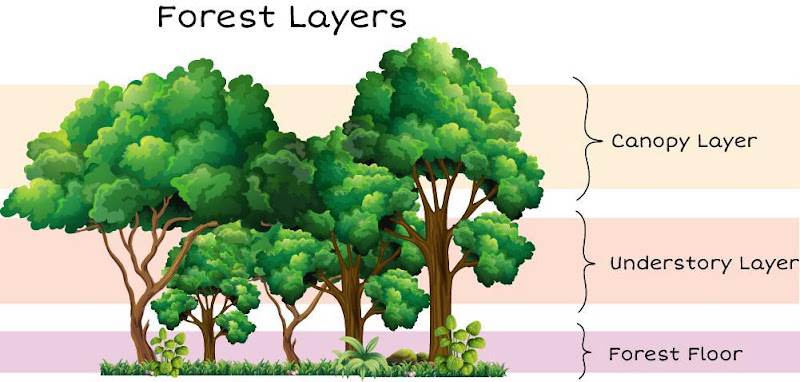 Forest Ecosystem
📌 Introduction
Forests are one of the most valuable natural resources on Earth. They are often called "our lifeline" because they provide oxygen, food, and shelter, while maintaining the delicate ecological balance of our planet.
👉 Key Fact: Forests cover approximately 30% of Earth’s land area and support millions of living organisms, from tiny microorganisms to large mammals.
🌿 What is a Forest?
A forest is a large area covered with trees, plants, and various organisms forming a natural, self-sustaining ecosystem. It is a dynamic "living entity" that is much more than just a collection of trees.
💡 A forest ecosystem includes:
- Producers: Trees, shrubs, and herbs (Green plants)
- Consumers: Animals and birds (Herbivores, Carnivores)
- Decomposers: Microorganisms like bacteria and fungi
🌍 Structure of a Forest
Forests are organized into distinct vertical layers based on the height of the vegetation:
1. Canopy 🌲
- The top layer formed by the branches of tall trees.
- It acts like an umbrella, receiving maximum sunlight and protecting the layers below from heavy rain.
2. Understory 🌱
- The layer below the canopy consisting of smaller trees, shrubs, and tall grasses.
- This layer receives significantly less sunlight.
3. Forest Floor 🍂
- The ground layer covered with dead leaves, twigs, fruits, and organic matter.
- It is dark, damp, and rich in nutrients due to the constant work of decomposers.
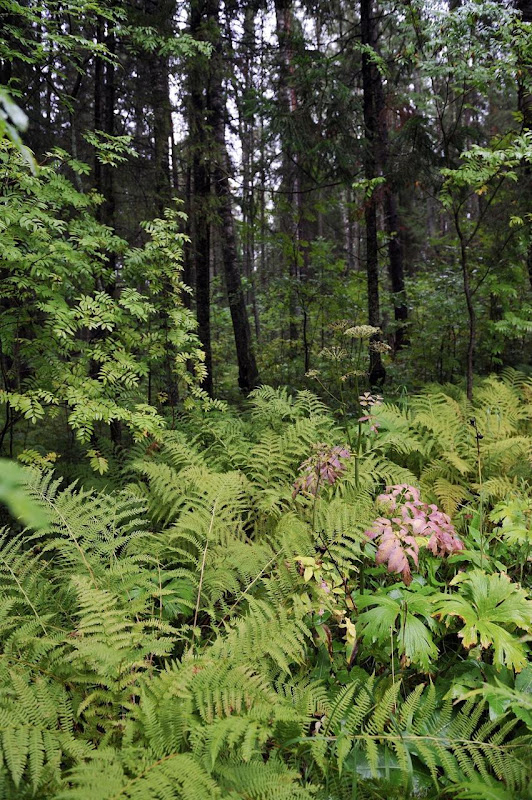 Forest Layers
🔄 Importance of Forests
Forests perform several critical functions that sustain life on Earth:
1. Oxygen & Carbon Balance 🌬️
- Through photosynthesis, trees absorb Carbon Dioxide and release Oxygen.
- They help reduce the "greenhouse effect" and combat global warming.
2. Climate & Rainfall Regulation 🌧️
- Forests contribute to the water cycle through transpiration.
- They help increase local rainfall and keep the surroundings cool.
3. Habitat for Wildlife 🐾
- They provide food and shelter to a vast majority of Earth's terrestrial biodiversity.
- They are essential for the survival of many endangered species.
4. Soil Conservation 🌱
- Tree roots hold the soil firmly, preventing soil erosion.
- Forests also act as natural absorbers of rainwater, preventing floods and recharging groundwater.
🔁 Interdependence in the Forest
All organisms in a forest are linked through Food Chains and Food Webs.
- Example: Plants (Producers) → Deer (Herbivore) → Tiger (Carnivore)
If any part of the food chain is disturbed, it affects all other organisms in the ecosystem. Decomposers play a vital role by breaking down dead matter into humus, which enriches the soil and provides nutrients back to the plants.
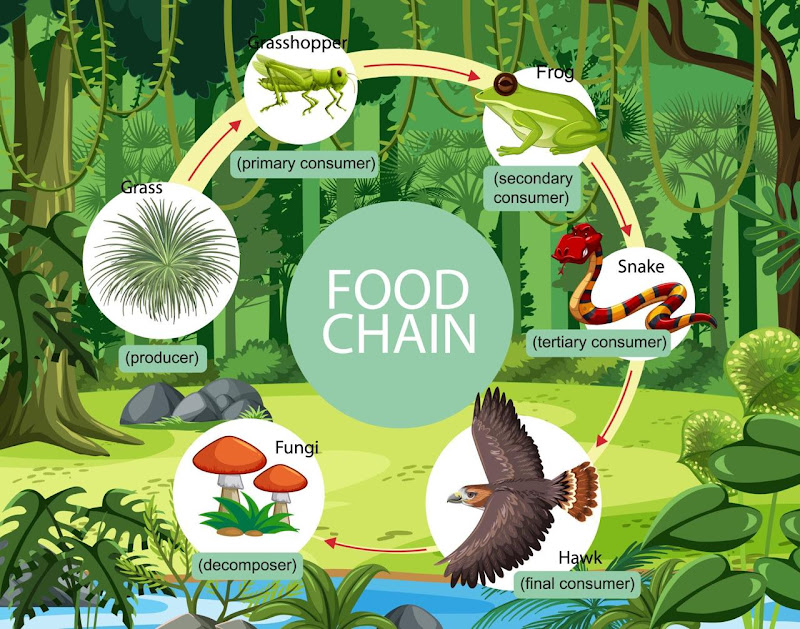 Food Chain in Forest
⚠️ Deforestation – A Growing Threat
Deforestation is the large-scale removal of trees, which leads to severe environmental consequences.
Major Causes:
- Urbanization and construction
- Agriculture expansion
- Overgrazing and forest fires
Severe Effects:
- Loss of habitat and biodiversity
- Increased carbon dioxide levels in the atmosphere
- Soil erosion and increased frequency of floods
🌱 Conservation of Forests
Saving our forests is essential for a sustainable future.
Steps we can take:
- Afforestation: Planting more trees on a large scale. 🌳
- Preventing Overgrazing: Managing livestock effectively.
- Sustainable Use: Using paper and wood resources responsibly.
- Raising Awareness: Educating communities about the value of forests.
- Strict Laws: Following and enforcing government environmental regulations.