
General Science: Photosynthesis and Interdependence
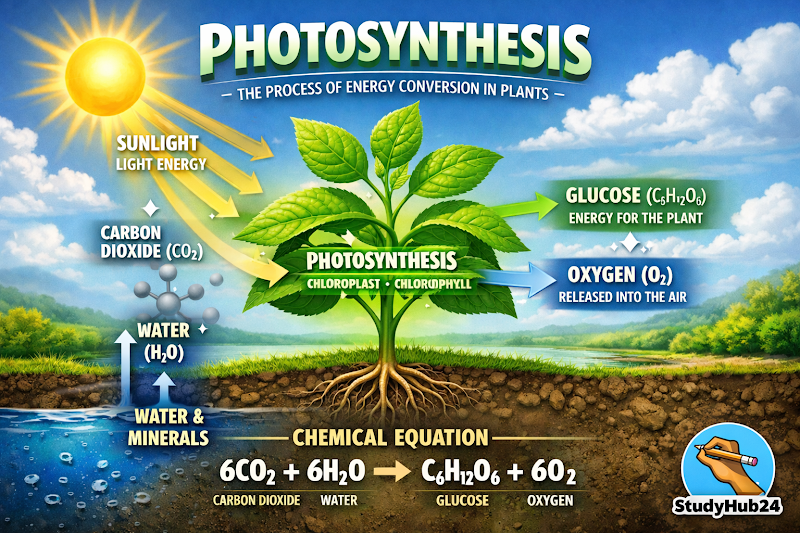 Photosynthesis Process
📌 Introduction to Plants
Plants are found almost everywhere on Earth and are the primary source of life for most organisms. In ecology, plants are called producers because they have the unique ability to create their own food.
They do this by utilizing:
- Carbon Dioxide
- Water
- Chlorophyll (the green pigment in leaves)
- Sunlight
In return, the process produces glucose (sugar/food) and oxygen (which we breathe). This remarkable chemical process is known as Photosynthesis.
☀️ What is Photosynthesis?
Photosynthesis is the process by which green plants and some other organisms use sunlight to synthesize nutrients from carbon dioxide and water.
Key Requirements:
- Sunlight: The energy source for the reaction. Because sunlight is required, this process primarily takes place during the day.
- Chlorophyll: Present in the leaves, it absorbs the light energy.
- Carbon Dioxide & Water: These combine to form simple sugars.
The Result: Simple sugar called glucose and the release of oxygen into the atmosphere.
🔄 Interdependence of Plants and Animals
Plants and animals do not live in isolation; they depend on each other for survival in a delicate balance.
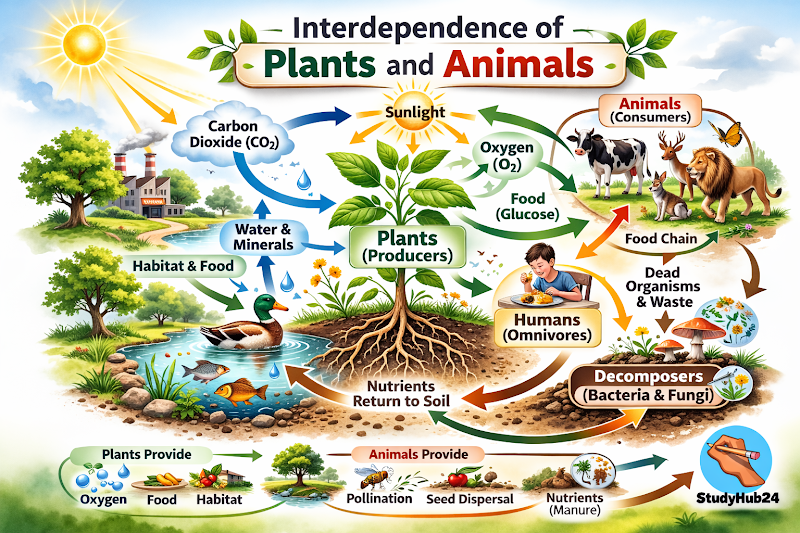 Interdependence Cycle
How Plants Help Animals:
- Oxygen: Plants release oxygen as a byproduct of photosynthesis, which is essential for animal respiration.
- Food: Plants are the base of the food chain, providing energy to herbivores and, indirectly, to carnivores.
- Habitat: Forests and plants provide shelter and nesting grounds for countless species.
How Animals Help Plants:
- Carbon Dioxide: Animals exhale CO₂, which plants need to perform photosynthesis.
- Manure: Animal waste and decomposed bodies provide essential nutrients (manure) to the soil, helping plants grow.
- Pollination: Insects and birds help in the reproduction of plants by carrying pollen from one flower to another.
This mutual dependence ensures the continuity of life on our planet.