
Clothes We Wear: Science and Style
 Different Types of Clothes
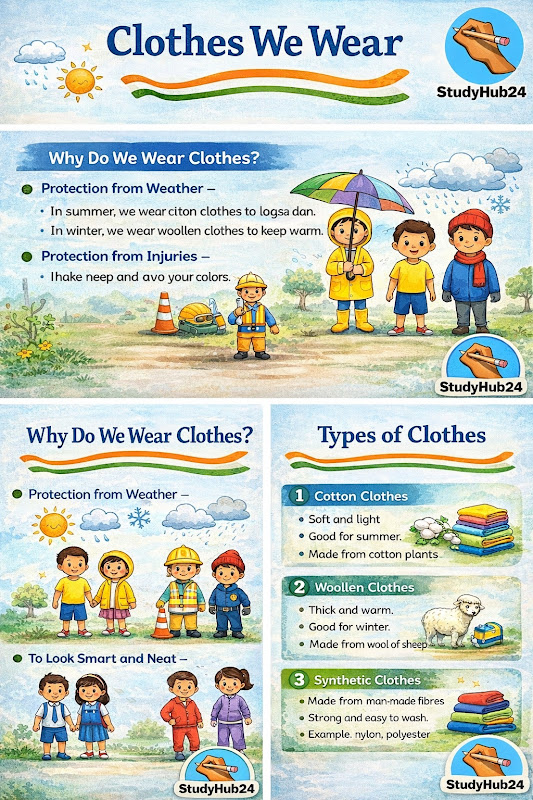
Clothes are an essential part of our lives. Beyond making us look presentable, clothes serve a functional purpose by protecting our bodies from environmental factors like heat, cold, rain, dust, and insects.
🌞 Why Do We Wear Clothes?
- Weather Protection:
- In summer, we wear light cotton clothes to absorb sweat and keep our bodies cool.
- In winter, we wear woolen clothes to trap body heat and keep us warm.
- In the rainy season, we use waterproof gear like raincoats and umbrellas.
- Safety and Injury Prevention: Special attire like helmets, gloves, and thick uniforms protect workers in hazardous environments.
- Hygiene and Presentation: Wearing clean clothes prevents skin infections and makes us look neat and professional.
🧵 Types of Fibers
Clothes are made from fibers, which can be broadly classified into two categories:
1. Natural Fibers
These are obtained from plants and animals.
- Cotton: Obtained from cotton plants. It is soft, breathable, and ideal for hot weather.
- Wool: Obtained from the fleece of sheep, goats, or camels. It traps air and provides warmth.
- Silk: Produced by silkworms. It is known for its smooth texture and luster.
2. Synthetic (Man-made) Fibers
These are prepared in factories using chemicals.
- Examples: Nylon, Polyester, and Rayon.
- Benefits: They are often stronger, more durable, and more resistant to wrinkles than natural fibers.
👗 Seasonal Clothing Guide
| Season | Recommended Attire | Material Used |
|---|---|---|
| Summer | T-shirts, shorts, cotton frocks | Cotton, Linen |
| Winter | Sweaters, jackets, woolen caps | Wool, Fur |
| Rainy | Raincoats, gumboots | Plastic, Rubber |
🧑🏫 Special Clothes: Uniforms
Uniforms are specialized sets of clothes worn by members of a specific organization or profession. They help in identification and promote a sense of equality.
- School Uniform: Helps students look disciplined and fosters a sense of belonging.
- Doctor’s Coat: White coats symbolize cleanliness and professional identity.
- Police & Military Uniforms: Designed for safety, durability, and authority.
- Sports Dress: Made of stretchy, breathable synthetic fabrics for comfort during physical activity.
🌍 Maintaining Your Clothes
- Washing: Regular washing removes dirt and bacteria.
- Ironing: Makes clothes look neat and kills certain germs with heat.
- Storage: Proper storage in dry places prevents the growth of mold and protects against insects like moths.
Always choose clothes that are comfortable and appropriate for the occasion and the weather!