
Cellular Respiration: The Energy Factory of Life
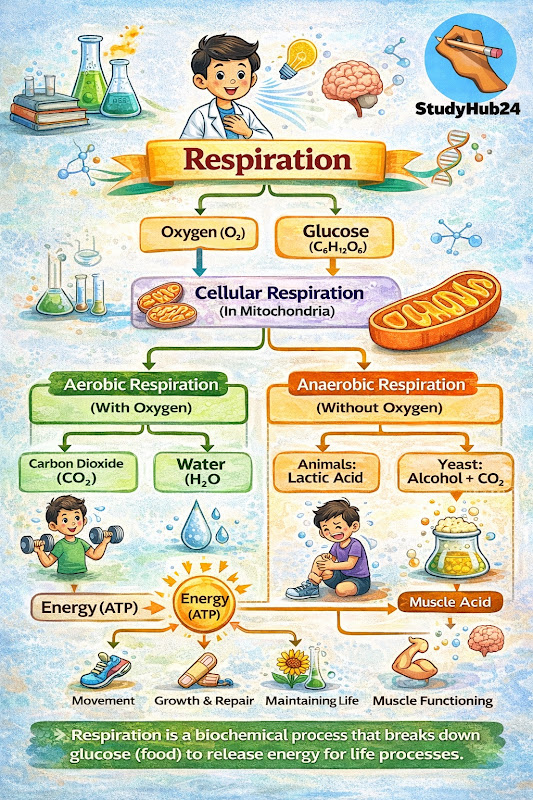 Respiration Process
Respiration is a fundamental biological process that occurs in all living organisms. It is the chemical process of releasing energy from the breakdown of food molecules, such as glucose. This energy powers every function in our body, from the beating of our heart to the thoughts in our brain.
⚡ What is Respiration?
In simple terms, respiration is the process of breaking down food to release energy. While "breathing" is the physical act of moving air in and out of the lungs, respiration is the chemical reaction that happens inside our cells.
Energy produced is used for:
- Growth and repair of tissues.
- Muscle contraction and movement.
- Maintaining a constant body temperature.
- Sending nerve impulses.
🔬 Cellular Respiration and the "Powerhouse"
Respiration takes place inside the cells, specifically in an organelle called the mitochondria. Because it generates most of the cell's energy supply, the mitochondria are often called the "Powerhouse of the Cell."
The Chemical Equation
The primary fuel for respiration is glucose (sugar). When glucose reacts with oxygen, it releases energy, along with carbon dioxide and water as byproducts.
Word Equation:
Glucose + Oxygen → Carbon Dioxide + Water + Energy (ATP)
Chemical Equation:
C₆H₁₂O₆ + 6O₂ → 6CO₂ + 6H₂O + Energy
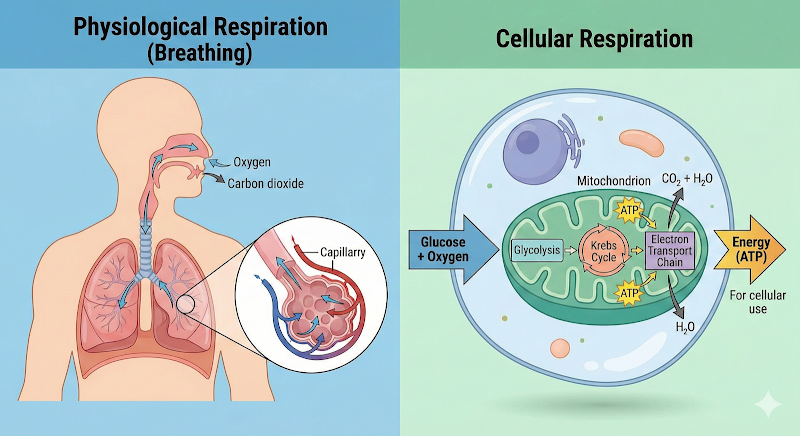 Cellular Respiration Diagram
🔹 Types of Respiration
Depending on the availability of oxygen, respiration follows two different pathways:
1. Aerobic Respiration
This occurs in the presence of oxygen and is the most efficient way to produce energy.
- Occurrence: Mitochondria.
- Energy Yield: High (36-38 ATP molecules per glucose).
- End Products: CO₂, Water, and Energy.
- Example: Humans, animals, and plants.
2. Anaerobic Respiration
This occurs in the absence of oxygen. It is less efficient and produces much less energy.
- In Yeast (Fermentation): Produces Ethanol (alcohol), CO₂, and energy. Used in bread-making and brewing.
- In Human Muscles: During intense exercise, when oxygen supply is low, glucose is partially broken down into Lactic Acid. The accumulation of lactic acid causes muscle cramps.
🔄 Breathing vs. Cellular Respiration
| Feature | Breathing | Cellular Respiration |
|---|---|---|
| Nature | Physical process | Biochemical process |
| Location | Respiratory system (Lungs) | Inside every cell (Mitochondria) |
| Energy | Uses energy | Releases energy (ATP) |
| Enzymes | No enzymes involved | Uses specific enzymes |
🌱 Respiration in Plants
Like animals, plants also need energy to stay alive. They respire 24 hours a day (day and night).
- Gas Exchange: Plants take in oxygen and release CO₂ through tiny pores on leaves called stomata.
- Roots: Even roots need oxygen to survive, which they take from the air spaces present in the soil.
🧠 Knowledge Check: Exam Prep
- What is ATP?
👉 ATP (Adenosine Triphosphate) is known as the "Energy Currency of the Cell." It stores and carries energy for all cellular activities. - Why do we pant after heavy exercise?
👉 To provide extra oxygen to the muscles to break down the accumulated lactic acid and recover from "oxygen debt." - Why is yeast used in the bakery industry?
👉 Because it performs anaerobic respiration, releasing CO₂ gas which makes the dough rise and become fluffy.